


How Regular Hair Trims Prevent Split Ends & Colour Damage
Why Regular Hair Trims Matter, What Really Causes Split Ends & How to Protect Coloured Hair
As a hairstylist, one of the most common things I hear is: “I’m growing my hair, so I’m avoiding trims.” Says Rod Anker
Ironically, that’s often the reason hair stops growing the way people want it to.
Let’s talk about why regular hair trims are essential, how split ends actually form, and why overlapping hair colour can quietly damage hair — especially in Indian weather.
Why Regular Hair Trims Are Important
Hair trims aren’t about cutting length. They’re about maintaining hair health.
Split ends don’t repair themselves. Once hair splits, the damage travels upward, causing:
- Thinner ends
- Increased breakage
- Frizz and dryness
- Hair that won’t hold shape or style
This is why searches for how often should you trim your hair, hair trims for growth, and split ends prevention continue to rise.
From a professional standpoint, trimming every 8–12 weeks removes damaged ends before they travel further — helping hair look thicker, healthier, and easier to manage.
How Split Ends Actually Happen
Split ends aren’t random. They’re caused by daily wear and tear:
- Heat styling
- Sun and UV exposure
- Brushing and friction
- Chemical services like colouring
- Lack of conditioning and protection
Over time, the protective outer layer of the hair ( the cuticle )wears away. When the cuticle lifts and cracks, the hair begins to split.
Once that happens, no product can permanently “fix” a split end — it can only temporarily smooth it. Trimming is the only real solution.
Why Overlapping Hair Colour Causes Damage
One of the most overlooked causes of breakage is colour overlap.
Applying permanent or lightening colour repeatedly over previously coloured hair weakens the hair structure. Even if the shade looks fine, the hair underneath becomes:
- Drier
- More fragile
- Prone to snapping and split ends
This is why professional colour work focuses on new growth application and careful refreshing of mid-lengths and ends only when necessary.
Over-processing doesn’t show immediately — but it shows over time.
How to Prevent Colour Fade
Hair colour fades due to:
- Not using a Sulfate free shampoo
- Sun exposure
- Heat styling
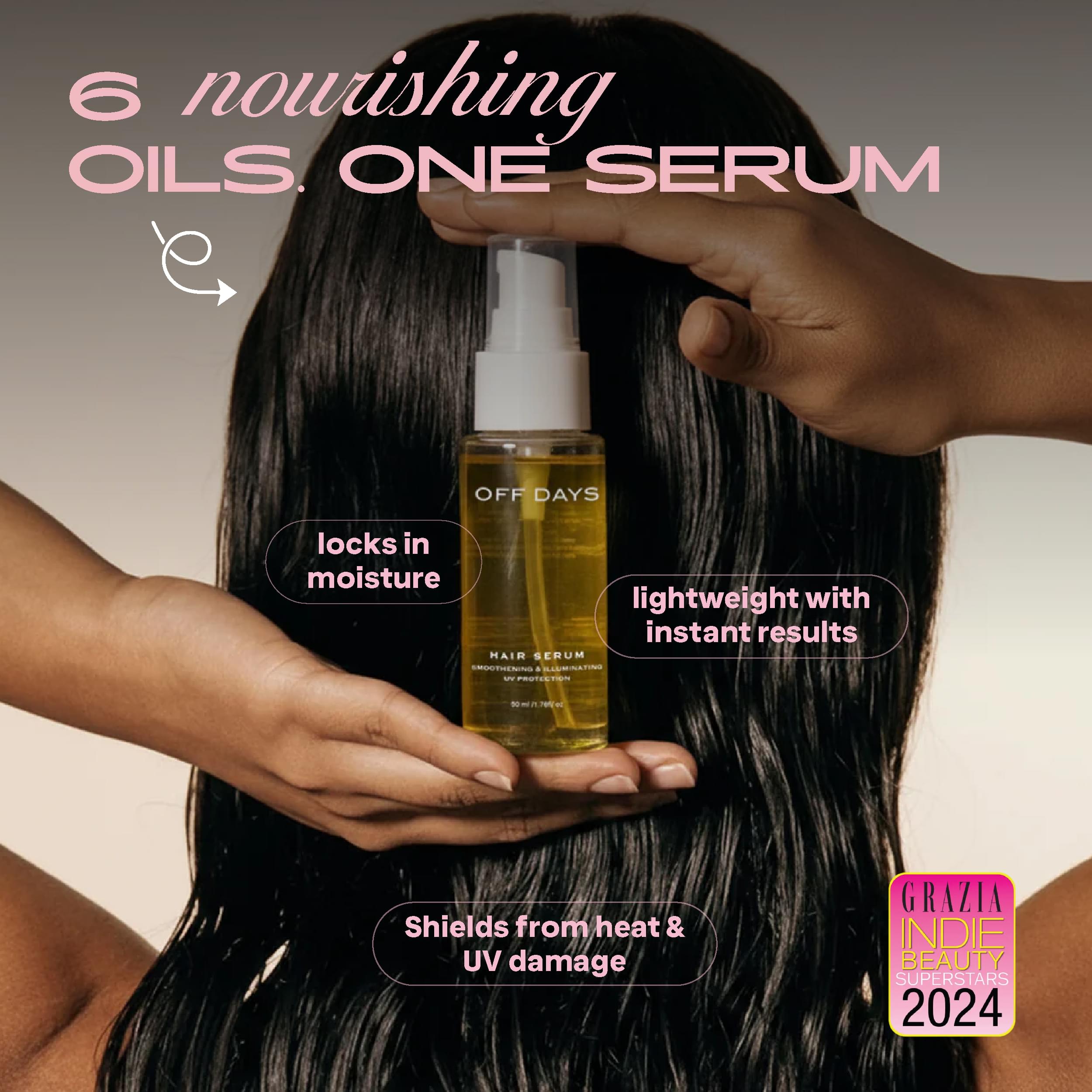
- Lack of conditioning or the use of a serum or product to help close the cuticle and give heat protection
To prevent colour fade and maintain shine:
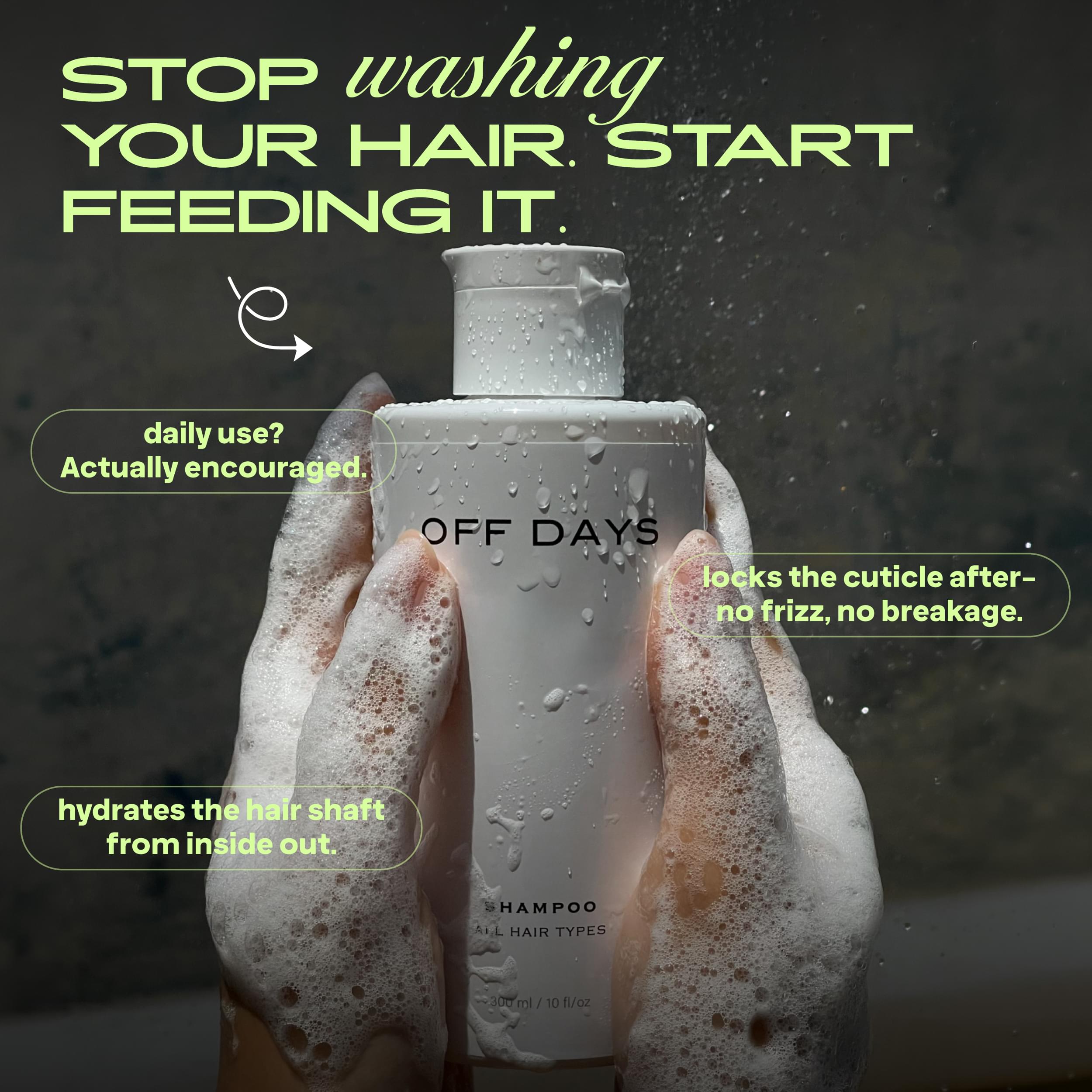
- Use a gentle shampoo for coloured hair
- Condition consistently
- Protect hair from heat and UV exposure
- Avoid unnecessary re-colouring of lengths
This is where everyday haircare matters.
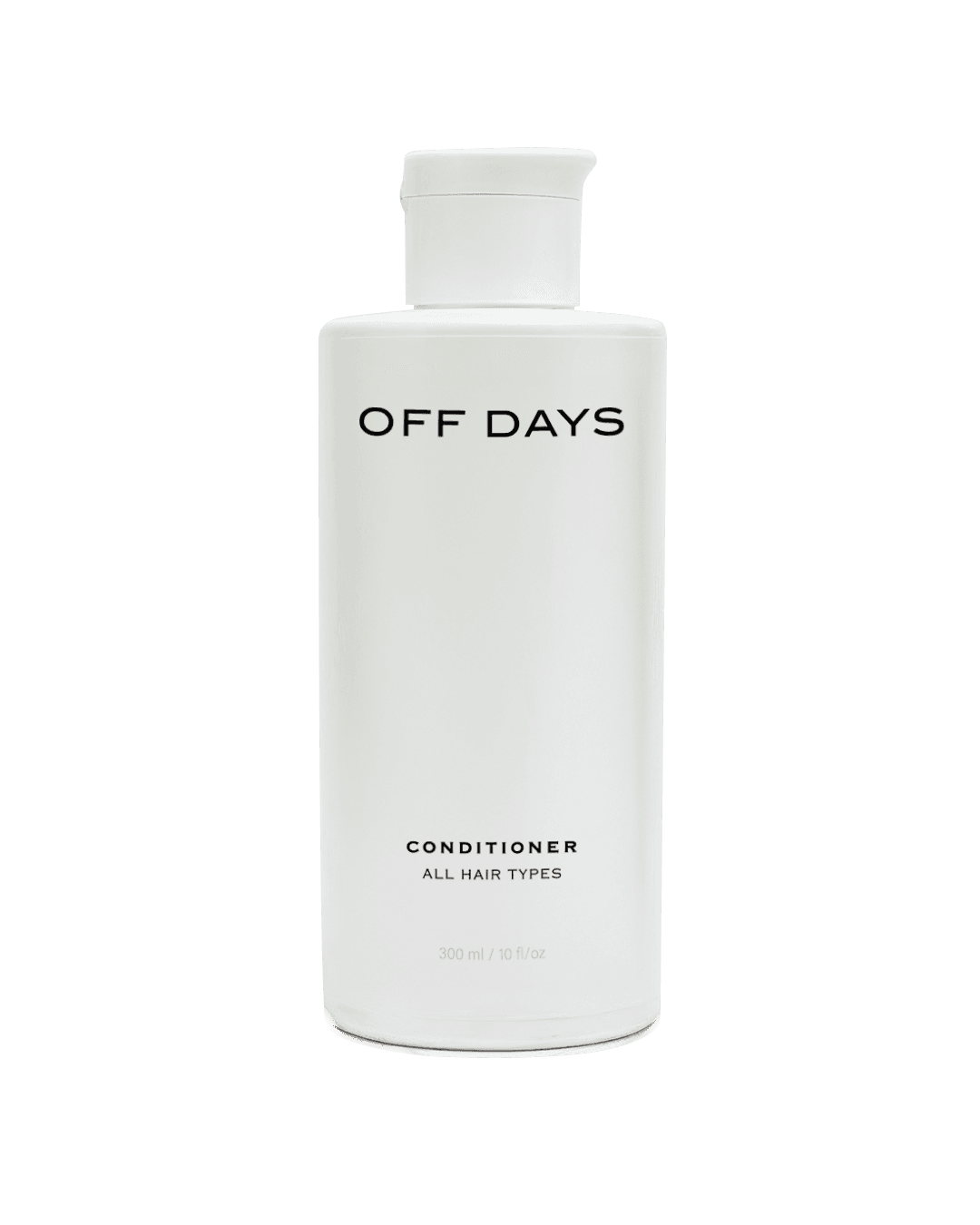
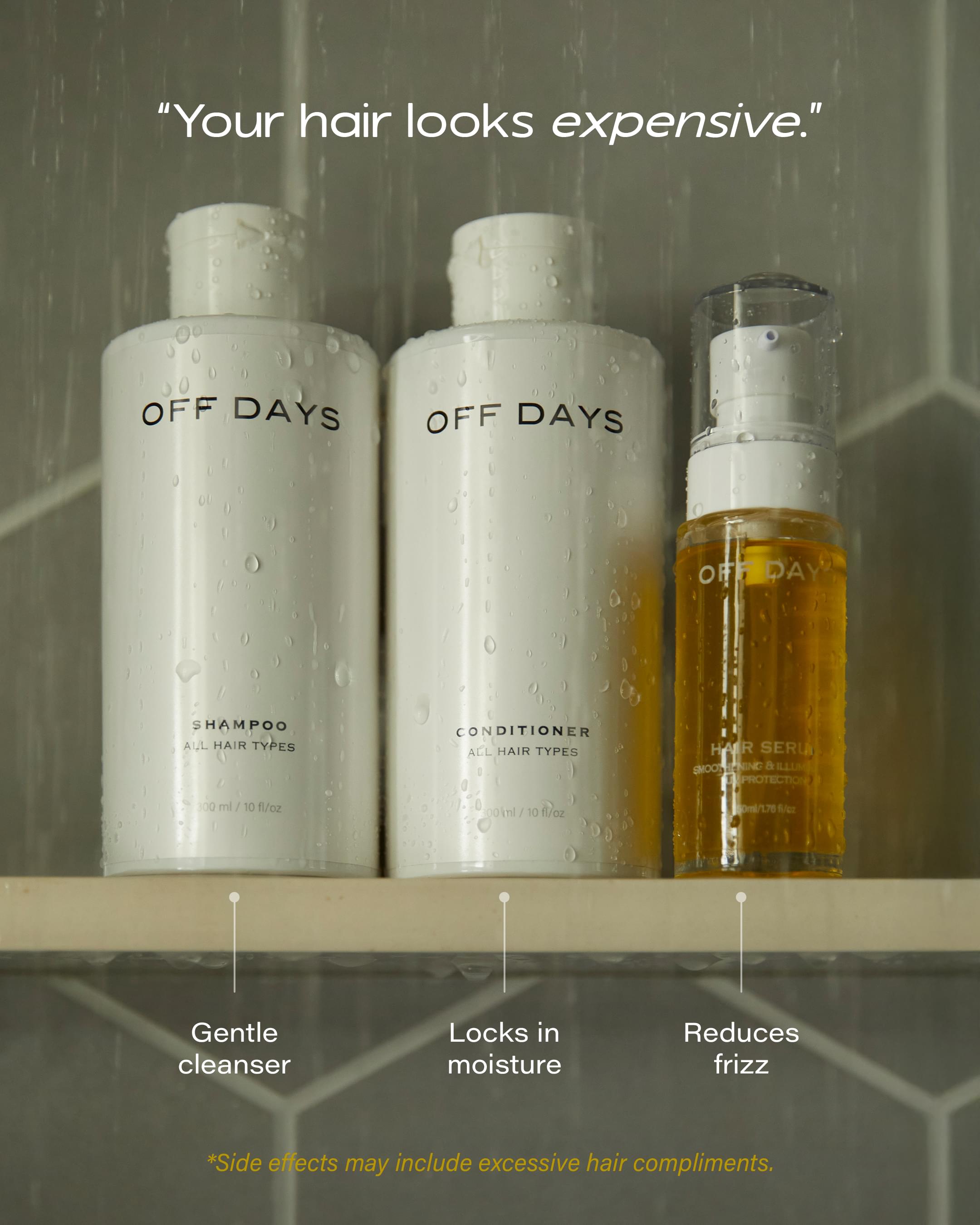
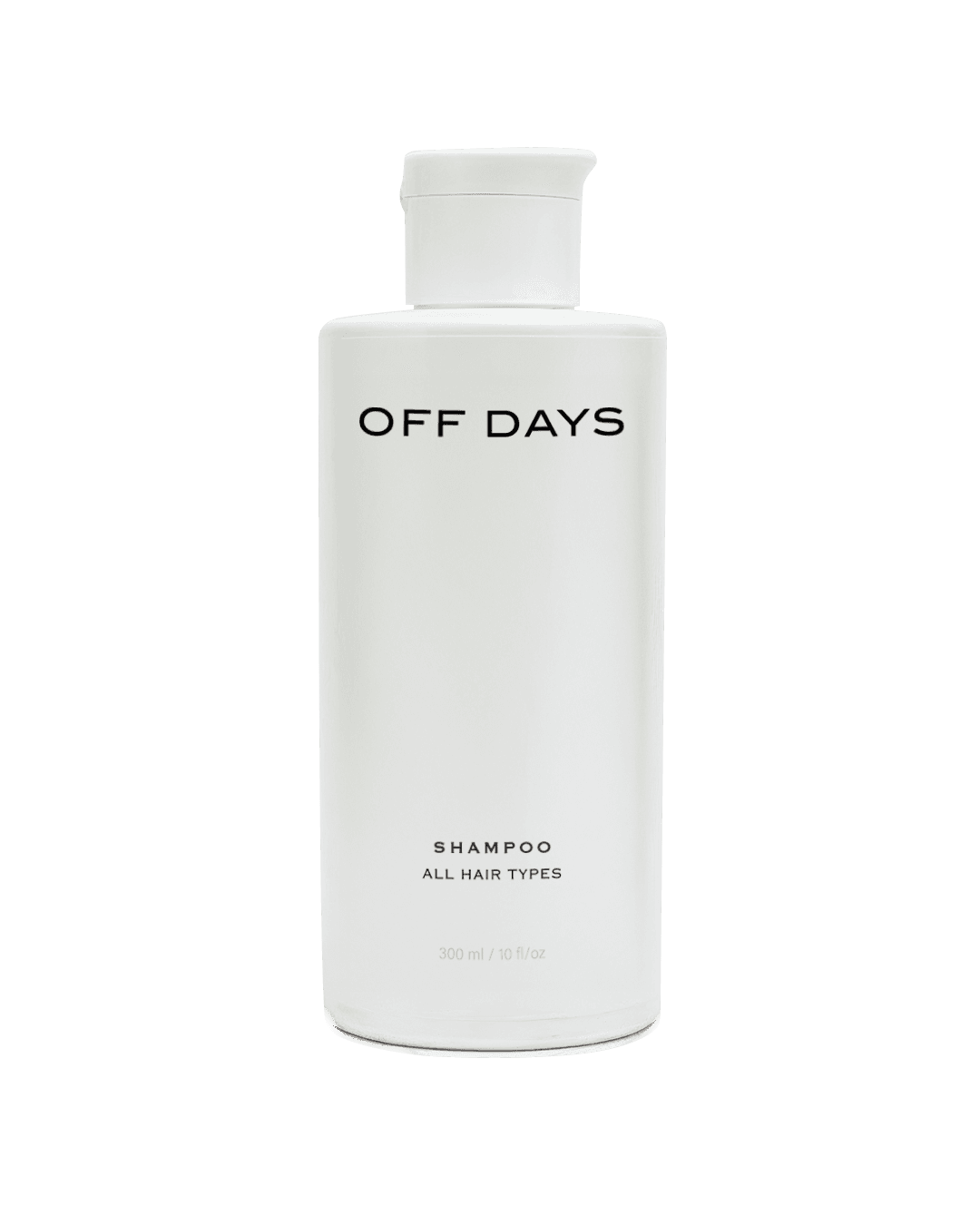
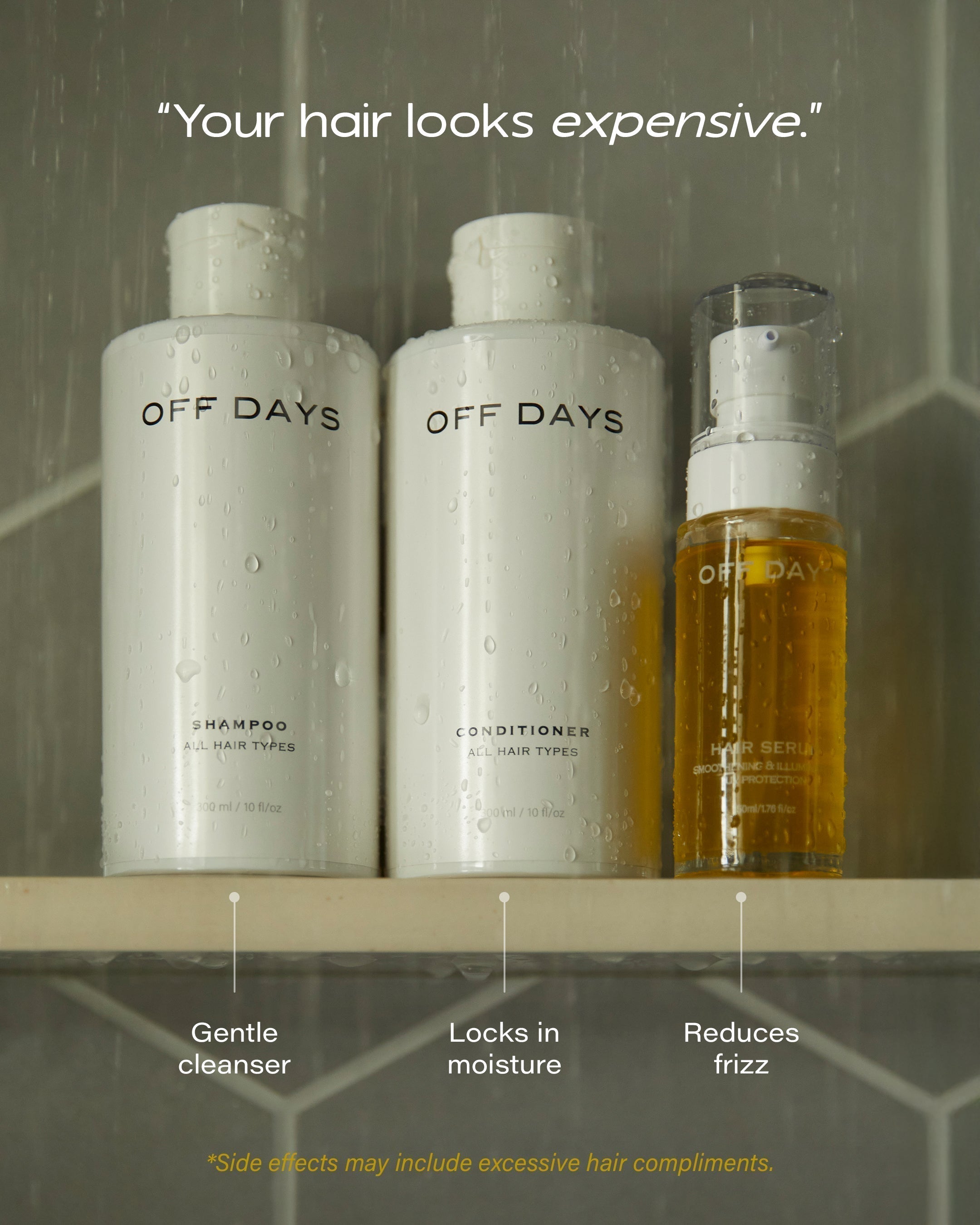
Where Off Days Fits In
Off Days was created for hair between salon visits — where real maintenance happens.
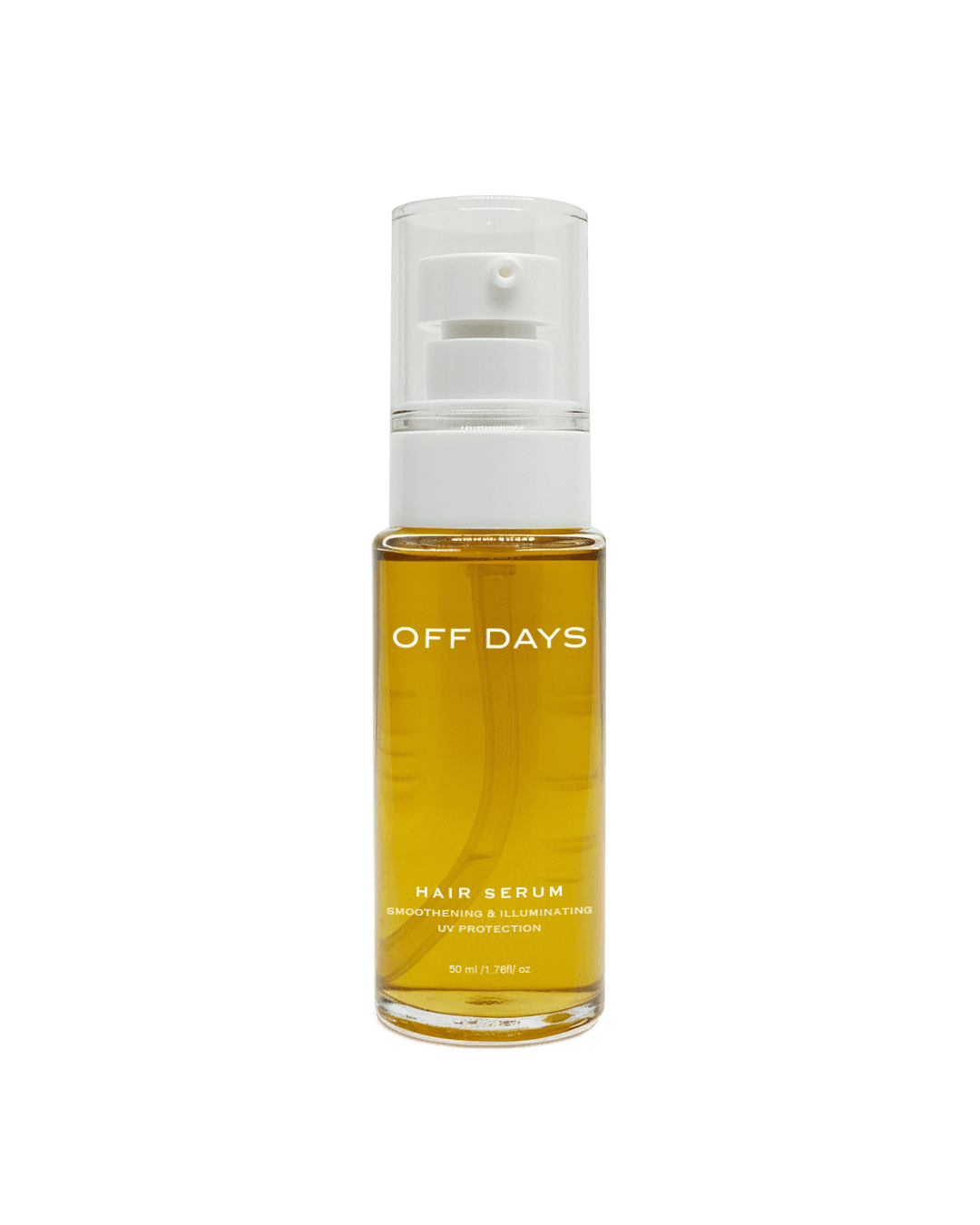
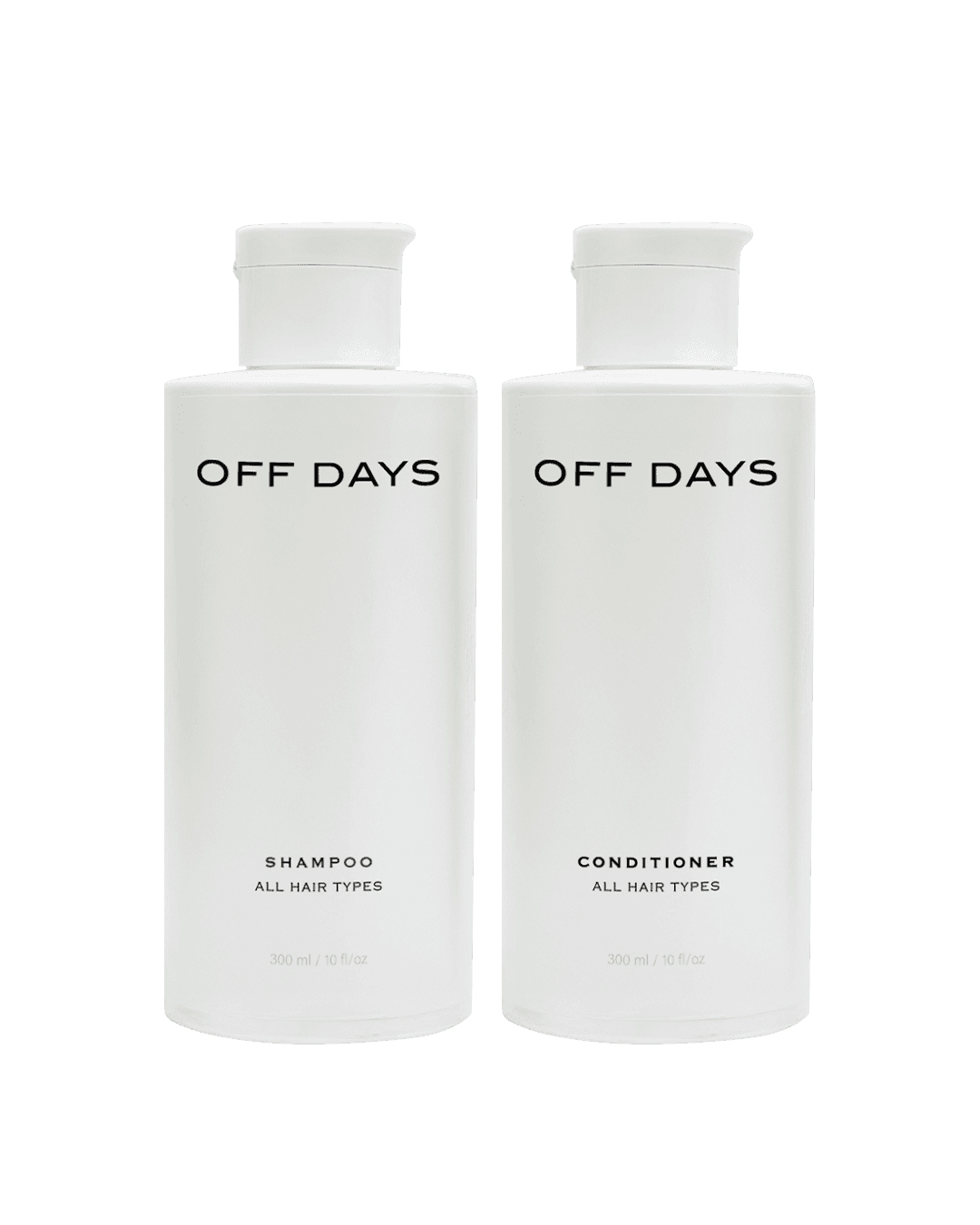
Lightweight shampoos that cleanse without stripping, conditioners that soften without heaviness, and serums that protect hair from heat, humidity, and UV exposure all help:
- Reduce split ends
- Preserve colour
- Keep hair manageable daily
Good hair isn’t maintained at the salon alone. It’s maintained in the routine.
A Hairstylist’s Final Take
If you want long hair, healthy hair, or coloured hair that lasts — regular trims are non-negotiable.
Hair grows best when it’s cared for consistently, trimmed intentionally, and protected daily.
Less damage. Less breakage. Better hair.
And that’s the difference between chasing length — and actually enjoying it.
Read more
Most hair problems don’t start with styling. They start in the shower. As a hairstylist, I see it every day — clients spending time, money, and effort on treatments and products, only to undo it al...

Your hair is the one thing you never take off. It’s with you at work, at home, in meetings, on holidays, and in every photo you’ll look back on years from now